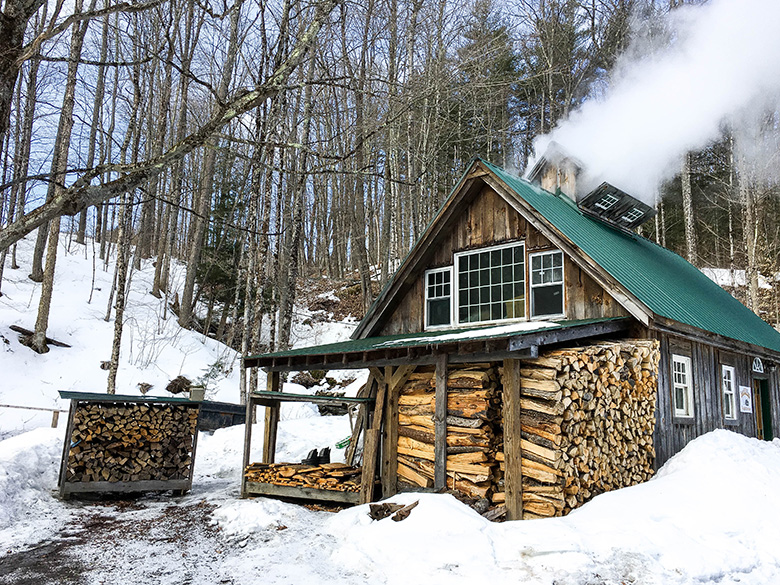
March is Maple Month in New England! A month of all things maple: flowing sap, late nights boiling in sugar houses, delicious maple recipes and treasured traditions.
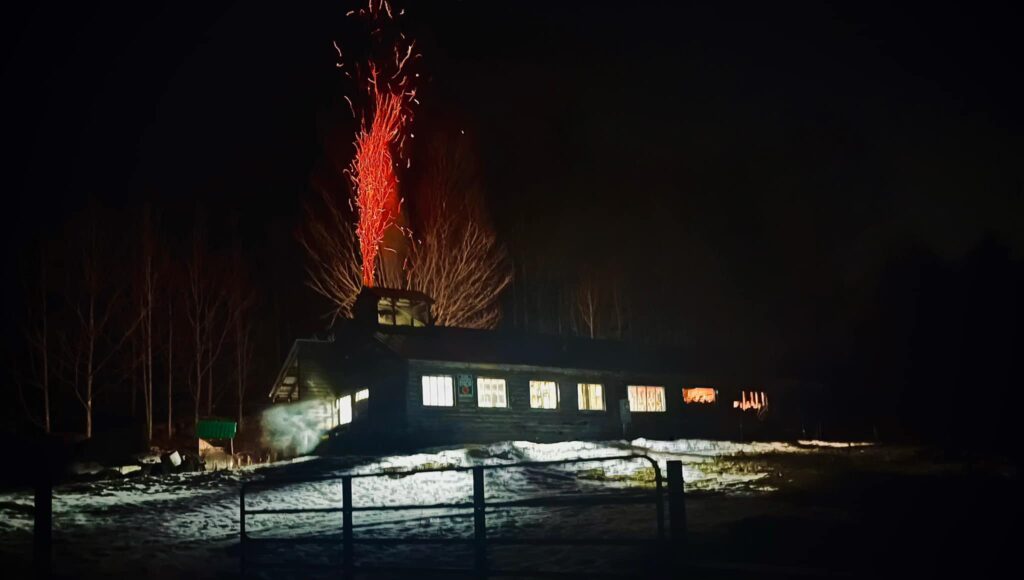
Sugar houses all over the New England are groaning to life, awakening from a sleepy winter slumber. Smoke is billowing from their chimneys, readying for the task ahead of boiling maple tree sap in to the beautiful amber goodness that we all know and treasure as maple syrup. One of the sweetest times of the new year, and a sure sign that Spring and nicer weather is starting to peek around the corner, beckoning Winter to wrap up her snowy antics.
This image of a bucolic, rural New England tradition is one of the strongest associations that people have with a New England Spring. Mud season and messy dirt roads lead down to the sweet smell of wood-fired stoves evaporating tree sap, the sound of friends and family gathered for the task at hand.
A Brief History of Maple Syrup in New England:
The beautiful maples that most associate with vibrant New England fall scenery have a long and storied history – one filled with importance, innovation and reverence – in the northeast.
Native Americans first introduced European settlers to the art of extracting and collecting the maple sap to reduce it down in to maple sugar and syrup. There is mention in journals of settlers that this process was being shared with the new inhabitants as early as 1609. There is also evidence of Native Americans first using the sap from 1540 on, although we could probably safely assume that sap was most likely being utilized for a number of years beforehand.
Early techniques involved cutting a V shape in to the tree and inserting a wedge at the base, allowing the sap to flow in to buckets placed on the ground below. These vessels were often hollowed out logs or baskets. Once the sap was collected, hot rocks were added to the vessel to boil off the water from the sap. This processing of fresh sap in to syrup or sugar crystals became very integral to tribes who used it for cooking, bartering and gifting.
There are many Native American legends surrounding using maple sap, but one in particular says an Iroquois chief, Woksis, was responsible for the discovery. The legend says that one cold winter night, the chief lodged his axe a few inches in to a tree. When he awoke in the morning to go hunting, he pulled his axe out of the tree and the sap, now flowing from warmer temperatures, began seeping from the tree. His wife happened to have a wooden basket underneath, which collected the sap. Thinking that her husband had filled it with water, she used the sap to cook some meat. When eaten, the meat had a sweet taste to it. They soon realized that this sweetness came from the sap of the maple tree.
Native Americans laid the foundations of time-honored traditions that still, in some form, exist in many ways today. They were very organized in their approach to collecting the sweet sap that the trees provided. The members of a tribe would create sugar camps around large groves of maple trees, commonly referred to as a sugarbush. They would make this area their home for an extended period of time under the Sugar Moon, collecting, boiling and preserving the trees’ gifts.
While today we so often associate maple with the amber liquid served at breakfast, Native Americans more commonly made sugar. Maple sugar has a longer shelf life, is easier to store, and better to transport. Any product that was easier to transport and trade with was essential at a time when people were more nomadic and had very few options for long-term storage.
European settlers that were privileged enough to be taught were observant, bringing back their newfound knowledge to settlements. They too began to enjoy the sweet benefits the sap offered. By 1790, they had found more efficient ways to streamline this effort. Inserted in to the holes of the bark were spiles – a hollowed out stick – that would allow sap to flow more easily. They also discovered that instead of adding hot rocks to the collection vessel, hanging a number of kettles over fire, where sap could be moved from one to the next created a quicker way to boiling off the water and concentrating the sap.
Maple sugar became just as important to the colonists as it was to the Native Americans. The use of maple sugar allowed them to be less dependent on imported sugar, which was often hard to obtain and very expensive. Without the need to buy sweeteners from foreign trading companies, this allowed that money to stay within the local community and economy.
As the years went on, technologies and new innovations were improved upon or discovered, what was once a very time consuming necessity, became a little easier as seasons passed. Patents for different machinery began appearing in the mid-to-late 1800’s. With the invention and new use of more sophisticated evaporators, sugarmakers could make larger quantities of syrup in a slightly easier way.

This excellent infographic from Breedon’s Maple in Ontario, Canada shows the steps from start to finish, from the collection of sap to the final product. While it may appear simple here, it is a time-consuming and often times disappointing. Sugarmarkers are a hardy bunch of folks who are loyal to their craft and it shows in the dedication and time they devote to their maple businesses.
Today’s technology has made leaps and bounds from the earliest days, but the end goal has always been the same. Incredible machines and miles of sterile tubing allow labor-intensive collection to be more streamlined and easier on sugarmakers. Tubing allows gravity and suction pumps to work together, drawing the sap down towards holding tanks where it is easily transported to sugarhouses.
Maple sugaring has remained a time-honored spring event, bringing family and friends together for long nights with laughter and hard work at the core of all sugar houses. These times are the “fun” parts of the year; however, the work is never done for a sugarmaker. Throughout the summer, fall and early winter months, trees need to be tended to and checked for health and signs of disease; tubing needs to be repaired (squirrels and other critters like to nibble, while moose don’t even notice it on their treks through the forests, wrecking it along the way); machines repaired and maintained; and the sugarhouses kept clean and in working order, in anticipation of the sugaring season to come.
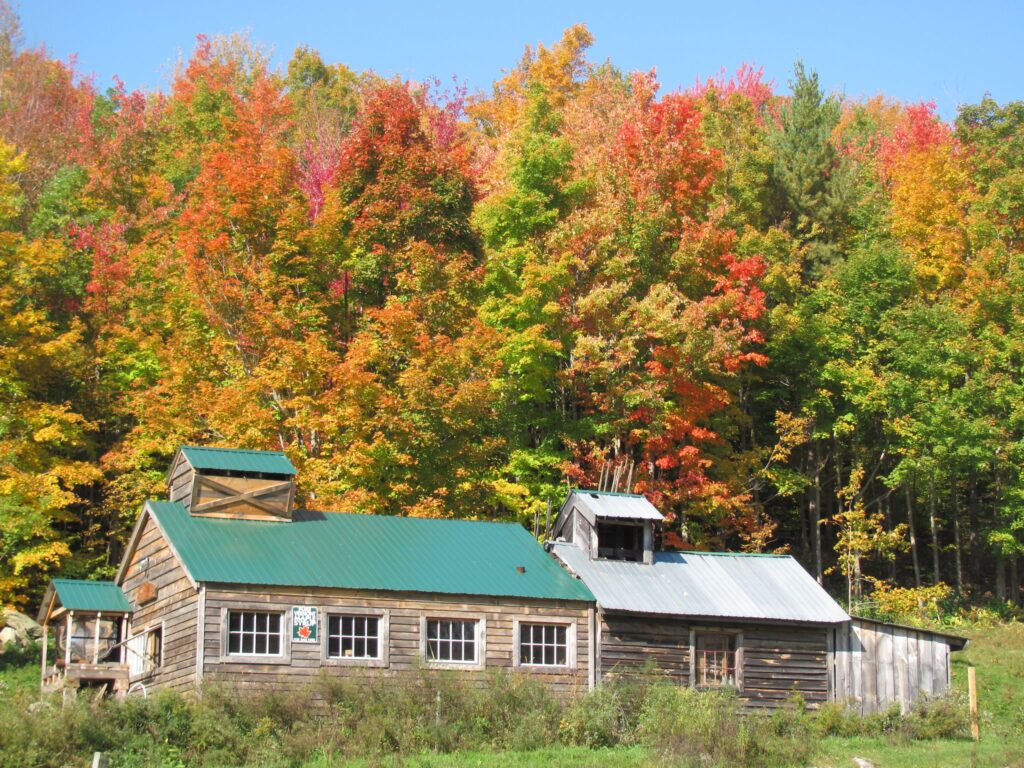
If given the chance, I encourage you to visit a sugar house. During your visit, learn more about collecting sap, the purpose of machines, family anecdotes and memories, and if you’re lucky? maybe even a small sample of their own maple. 😉 New Englanders love to talk, especially about topics they are passionate about, and this is definitely one of those topics.
Talk Sweet To Me – Maple Terms:
Sometimes, reading about maple sap and syrup? Well, it can seem a little bit like reading a foreign language. There are some unique terms and interesting techniques that the everyday person might find a bit difficult to place in context. Here are a few you might come across…
- SugarBush – A forest or grove of maple trees where the sap is harvested from. The sugarbush is not counted by the number of trees standing within, but rather by how many taps are set. Also called a sugar grove or sugar orchard.
- Sugar Camp – Before Sugar Houses / Sugar Shacks became the hub of activity during sugar season, sugar camps were remote sites set up in the woods by Native Americans and early settlers close to sugar bushes.
- Sugar Maker – The person or persons responsible for tapping, collecting and boiling down sap into maple syrup.
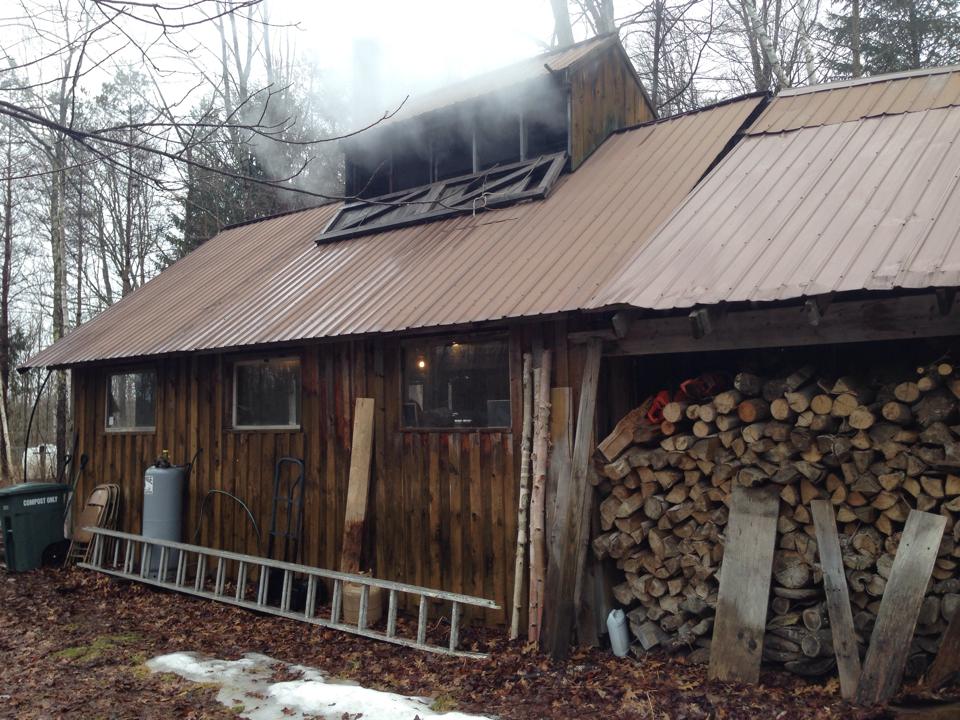
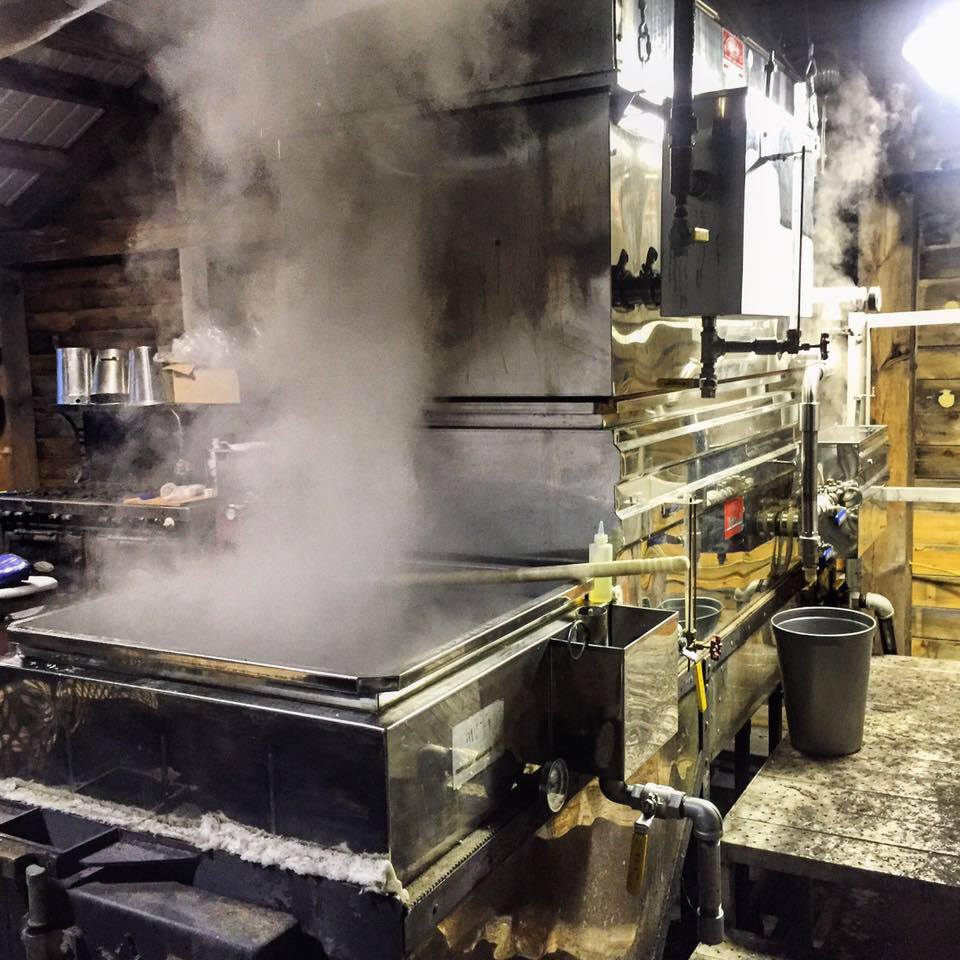
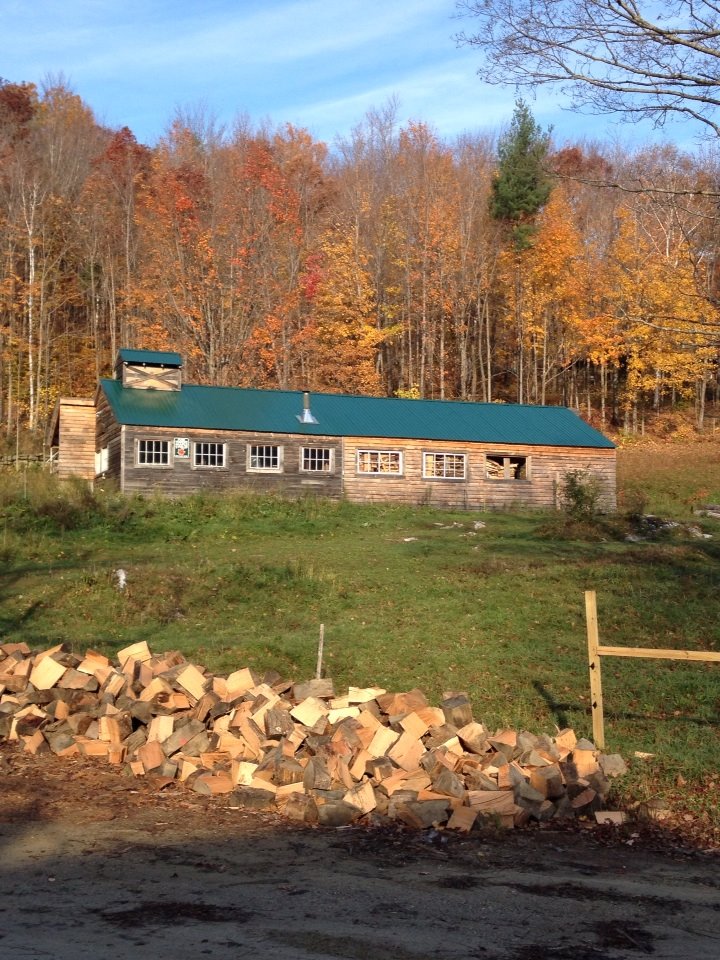
- Sugar House / Sugar Shack – A simple, often rustic building that holds the boiling equipment for sugaring. There is always a vent in the roof, enough space for an evaporator and the necessary fuel / wood to feed it and a place for storage. Today you will find many larger-scale operations also have attached restaurants, gift shops and small educational areas so visitors can learn more about sugaring.
- Sugar Off – This signals the end of the sugaring season. The weather has warmed enough, causing the sap to stop flowing and the boiling to come to an end.
- Run – The “run” is when the sap is running from the tree. This occurs when the weather is just right and the tree starts to release its sweet sap. This occurs when days are warm and nights are still below freezing. These conditions are considered perfect for sugaring season.
- Evaporator – This is the main machine that is the workhorse of a sugaring operation. These have become more advanced over the years from the first rudimentary pan systems, but the concept remains the same. A number of pan chambers sit over a fuel source, boiling the sap to allow the water to evaporate and steam to escape. The sap is drawn through these chambers until it is at its highest concentration directly over the fuel source and can be drawn off to finish.
- Grade (s) – There are 4 Grades used to differentiate between the lightest syrups to the darkest. The USDA recognizes four standard Grades: Golden Color/Delicate Taste, Amber Color/Rich Taste, Dark/Robust Taste, Very Dark/Strong Taste. The lighter is much more delicate, while the darker syrups have a more distinct maple taste.
- Sugaring – The art of turning sweet maple sap in to maple syrup. Days are typically between 35-45 degrees and the nights hover around or below freezing. Sugaring season comes to an end when temperatures rise and trees begin to put out their first spring buds.
- Taps & Tubing – Taps are the spouts placed in to the drilled holes in maple trees, allowing the sap to flow in to the buckets below, or the tubing attached. Tubing is a hollow sterile plastic tube that uses gravity and fancy new technology to transfer the sap from tree to holding tank. These tubes can run huge distances, allowing a great number of trees to be connected and eliminating tons of manual labor.
- Reverse Osmosis – This is a mechanical means meant to remove a portion of the water in the sap before boiling. It reduces the time needed for boiling by concentrating the sap. The syrup is passed through a type of membrane that allows the water to pass through, but the sugars are too big to pass, thus eliminating the need for such long boiling times.
- Sugar On Snow – One of the easiest (and best) ways to enjoy maple syrup! Syrup is thickened on a hot stove before being poured over crisp, white snow. It creates a taffy like treat that has been enjoyed for years.
Maple Recipes You Will Love:
Some of my favorite recipes to prepare for family and friends involve maple syrup. The unique flavor that maple contributes to any dish or dessert makes it so much more special and intriguing. I’ve listed a few of our favorites here – from breakfast and brunch staples all the way through dessert. If you try any, let me know how you like them!
Maple Pear Crisp – This pear crisp, sweetened with maple and some warm spices, is the perfect dessert and a great way to branch out from the traditional apple crisp.
Maple Cream – This is the perfect spread for toast, bagels or muffins if you’re not a fan of cream cheese. This has one and only one ingredient – maple syrup! It is easy to make at home and well worth the effort.
Maple Thumbprint Cookies –
Maple Cream Cheese Spread – This spread is perfect for topping toast, muffins, bagels and other breakfast staples, but it’s also delicious on roasted or baked sweet potatoes, as a dip for crackers or paired with fresh vegetables and fruits.
Maple Roasted Brussels Sprouts with Bacon – I am one of those rare people that absolutely loves Brussels Sprouts. These beautiful little cabbage-like vegetables are perfectly balanced with sweet and salty goodness when roasted with a bit of flaky kosher salt, black pepper bacon and sweet maple syrup.
Maple Bacon Gruyere Biscuits –
Maple Sugar Cookies –
Maple & Mustard Roasted Potatoes – A unique twist on roasted potatoes with hints of sweet maple and spicy mustard are a great addition to any dinner. Or, try them for a brunch side!
Maple Bacon Cinnamon Rolls with Maple (or Vanilla!) Frosting – Delightfully decadent, these are perfect for a holiday brunch or special occasion. They may take a bit of extra effort, but I promise you – they are worth it!
Maple Dijon Basil Vinaigrette – I love this salad dressing drizzled on a medley of roasted vegetables over a bedding of crisp greens, thinly sliced sweet bell peppers, toasted sunflower seeds and occasionally cast iron seared shrimp or chicken.
Maple Mustard Marinated Chicken Thighs – Maple and mustard create a happy union. It is a marriage of tastes that was made in the heavens. These chicken thighs are marinated
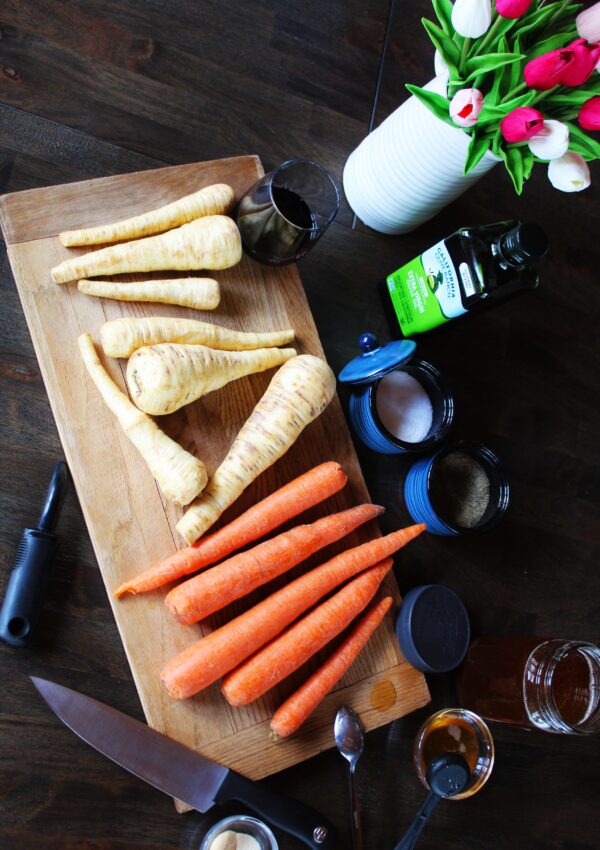
Maple Roasted Parsnips and Carrots – A great accompaniment to pork tenderloin or baked chicken, delightful parsnips and carrots are roasted together with maple syrup, spices and flaky sea salt, creating a wonderful balance.
Maple Whoopie Pies with Cinnamon Cream Cheese Frosting – A quintessential, classic New England dessert, the Whoopie Pie is usually two chocolate cakey cookies sandwiched together, the filling a sweet and creamy frosting. These Maple Whoopie pies are a spin on the classic – delectable maple cakes with a hint of spice, filled with a creamy cinnamon frosting.
Maple Events in New England:
Whether you live in New England, or are choosing to visit during maple season, there are plenty of sugar houses and unique events for you to immerse yourself in. Visit small family sugar shacks, or large scale outfits to learn all about the traditions and customs surrounding sugaring, to visit with the people behind the product and to take home some of their delectable goodies.
One of the most prolific Maple Events throughout New England is the Maple Weekend that each state hosts during the month of March. This gives sugar houses a time to showcase their hard work and sell products. Plus, sugarmakers are proud people! They love discussing details of their craft and the intricacies involved in this endeavor. You’ll find yourself in delightful, engaging conversations with some of the kindest people you will ever meet. 🙂
Vermont Sugar Houses — Vermont Maple Open Weekend: March 23-24, 2024
Vermont also hosts an annual Vermont Maple Fest in St Albans. The 57th Annual Festival will take place this year between April 26-28, 2024. The weekend-long event schedule is packed with sugar house tours, a maple banquet, a parade, kids entertainment, the University of Vermont timbersports team demonstrations, the 8.5 mile “Sap Run” through town, an antique show and so much more!
Massachusetts Sugar Houses — Massachusetts Maple Weekend: March 16-17, 2024
Maine Sugar Houses — Maine Maple Sunday Weekend: March 23-24, 2024
New Hampshire Sugar Houses — New Hampshire Maple Weekend: March 16-17, 2024
Connecticut Sugar Houses — Connecticut Maple Weekend: March 16-17, 2024
Interesting Maple Facts:
I think it’s fair to say that I am a huge fan of Maple – the trees, the sap, the syrup, the colors, the history… It’s all so interesting and so New England. There are so many interesting facts about maple trees and sugaring, and the more you know, the more you’ll fall in love with it, too. 🙂
- There are 132 species of Maple Trees
- Depending on the species, the lifespan of a maple tree can range between 100 – 400 years
- Most trees grow to between 33 – 148 feet tall
- Sugar, Black and Red maples are tapped for sap
- The first record of maple sugaring by Native Americans is in 1540
- Most of the world’s maple syrup is produced in Quebec – 8 million gallons a year
- Vermont is second, producing 890,000 gallons in 2021
- A single tree can produce up to 15 gallons per year
- It takes roughly 40 gallons of sap to make 1 gallon of maple syrup
- Trees typically have to be around 40 years old – at least 10/12 inches in diameter – to be tapped
- Taps are placed in a strategic way each new year to encourage healing of old tap “wounds” – which is done in about 3 years by a healthy tree
- Syrup isn’t the only delicious product to be made from these beauties. Charcoal from maple trees is used to make some Tennessee whiskey.
- Squirrels practice tapping maple trees, too! Young trees have their bark gnawed on by strong squirrel teeth, gouging enough of the bark for sap to flow so the squirrel can have a sweet treat!
And One of Our Maple Favorites…
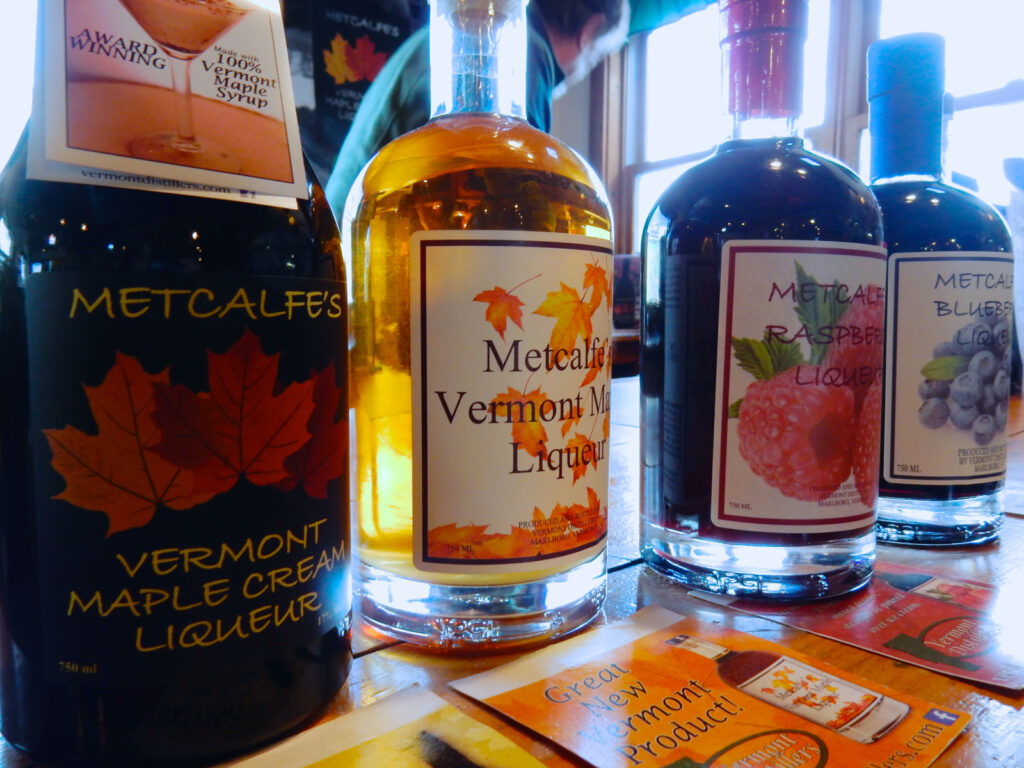
During any season of the year, one of our favorite weekend activities is visiting Metcalfe‘s Vermont Distillery Tasting Room in Marlboro, Vermont. Located in southern Vermont, you will find good people, a warm and inviting atmosphere and unique cocktails made with their wide-range of New England inspired spirits.
Their most popular and best-selling spirits are their Maple Cream Liqueur and Vermont Maple Liqueur. You can find both in online retailers, shipped right to your door. But! If you can, a visit to their distillery tasting room on Hogback Mountain, or their downtown Burlington shop, is well worth it and an experience you won’t forget.
For Further Reading & Curiosity:
I recently discovered a wonderful website – Maple Syrup History – run by an informed researcher and maple enthusiast, Dr. Mathew M. Thomas.
I appreciate his depth of knowledge, his research, his beautiful images and vintage prints, and all of the stories and history that he shares within his posts. If you are curious beyond the “how do you make maple syrup?” question, I would definitely recommend visiting his site. I have spent a lot of time perusing his articles and learning history I otherwise would have no knowledge of.
I hope this information, no matter how simple a snapshot, piques your interest in all things maple – especially beyond just an afterthought during a delicious breakfast. And if you are not a local to New England, or even if you are but don’t get the joy of living in close proximity to a sugar house – I hope you get to experience the excitement of a sugaring season at least once! 🙂


[…] recipe as much as I do! If you’re interested in other Pure Maple Syrup Recipes, check out my March is Maple Month in New England post. […]